Round Table Process
— Our mission Our mission Advancing National Prosperity Through Synergistic Development Partnerships The Round Table Process (RTP) is an inclusive mechanism, bringing together Government, development stakeholders to maximize development impact against the National Socio-Economic Development Plan (NSEDP).
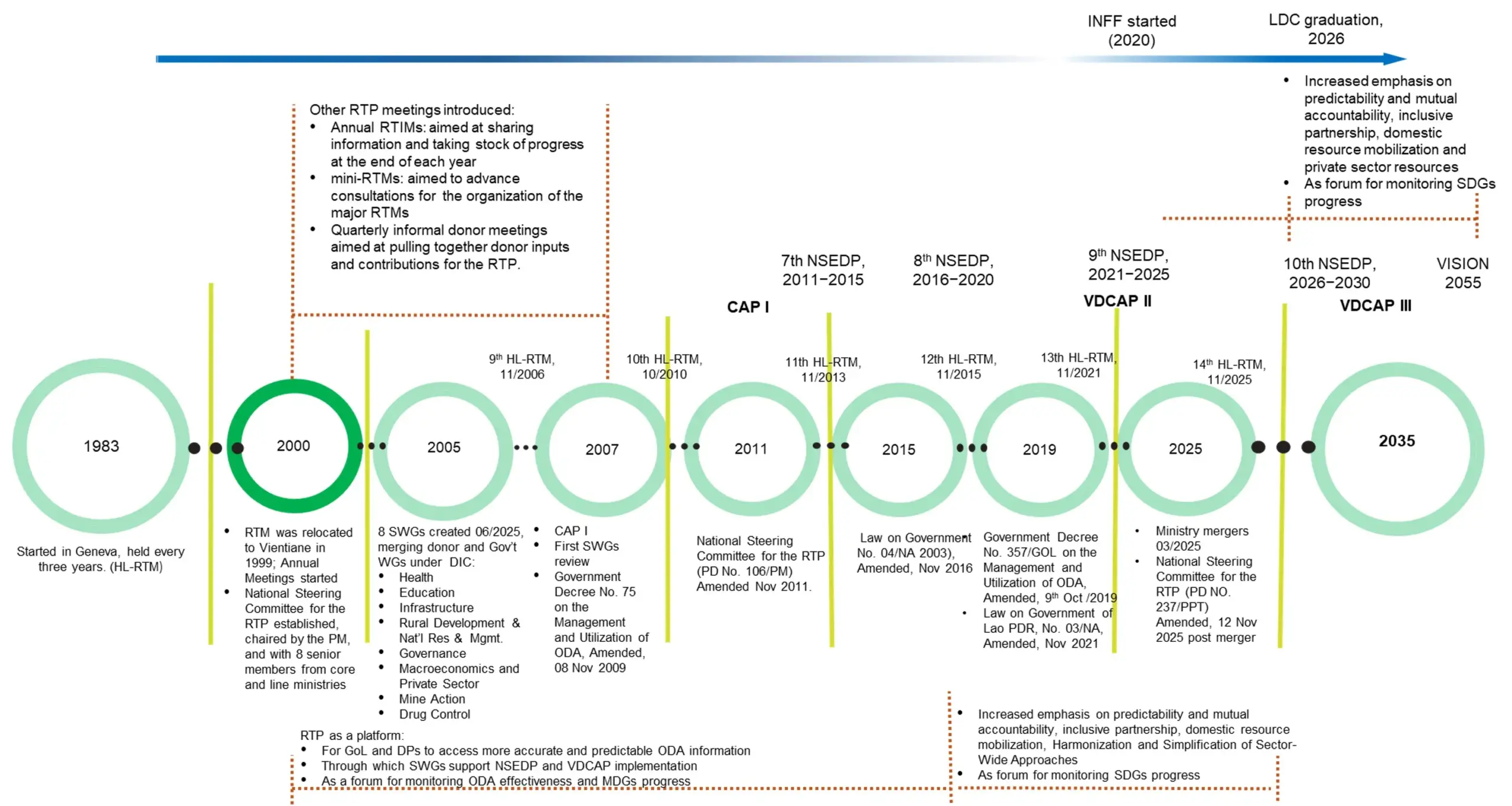
It has been started since 1983. The continuing and dynamic Round Table Process was launched in Lao PDR in the year 2000.
The objective of the RTP is to provide an inclusive platform for the Government of Lao PDR and all relevant development stakeholders including central and local governments, Development Partners (DPs), civil society, the private sector and representatives of parliaments and trade unions among others to exchange dialogue on the key national development agendas, mobilize resources and ensure effective coordination and cooperation, evaluation/assessment, monitoring and reporting.
The RTP has contributed to the implementation of the successive NSEDPs by converging all efforts of various development actors on pressing development issues, and to the formulation of the NSEDPs by incorporating input from diverse stakeholders so that the NSEDP can encompass the development needs of the country and guide the direction of development in Lao PDR.
The RTP is guided by the globally agreed principles on effective development cooperation defined by Global Partnership for Effective Development Cooperation (GPEDC), including host government ownership of development priorities, focus on results, inclusive partnerships and transparency & mutual accountability, which have been incorporated into the Vientiane Declaration on Partnership for Effective Development Cooperation (VD) and its country action plan (VDCAP).
High-Level Round Table Meetings (HL-RTMs) are organized every 5 years at the central level through reviewing plans, strategies and programs of the Government of Lao PDR with various development stakeholders. Round Table Implementation Meetings (RTIMs) are organized once a year in the intervening years of the HL-RTM either at the central or provincial level as appropriate.
1983
Round Table Meetings
2000
10
2026
— Guiding principles The four principles for effective development co-operation Endorsed in 2011
- 01
Country ownership (All partners work together under country leadership to maximize the impact of development resources and achieve national priorities.)
- 02
Focus on results (Development efforts have a lasting impact on eradicating poverty and enhancing partner countries’ capacities.)
- 03
Inclusive partnerships (All partners are engaged in development planning and implementation, recognizing their specific and complementary roles.)
- 03
Transparency and mutual accountability (Stakeholders are transparent in their co-operation and hold each other accountable for delivering on mutually agreed outcomes.)
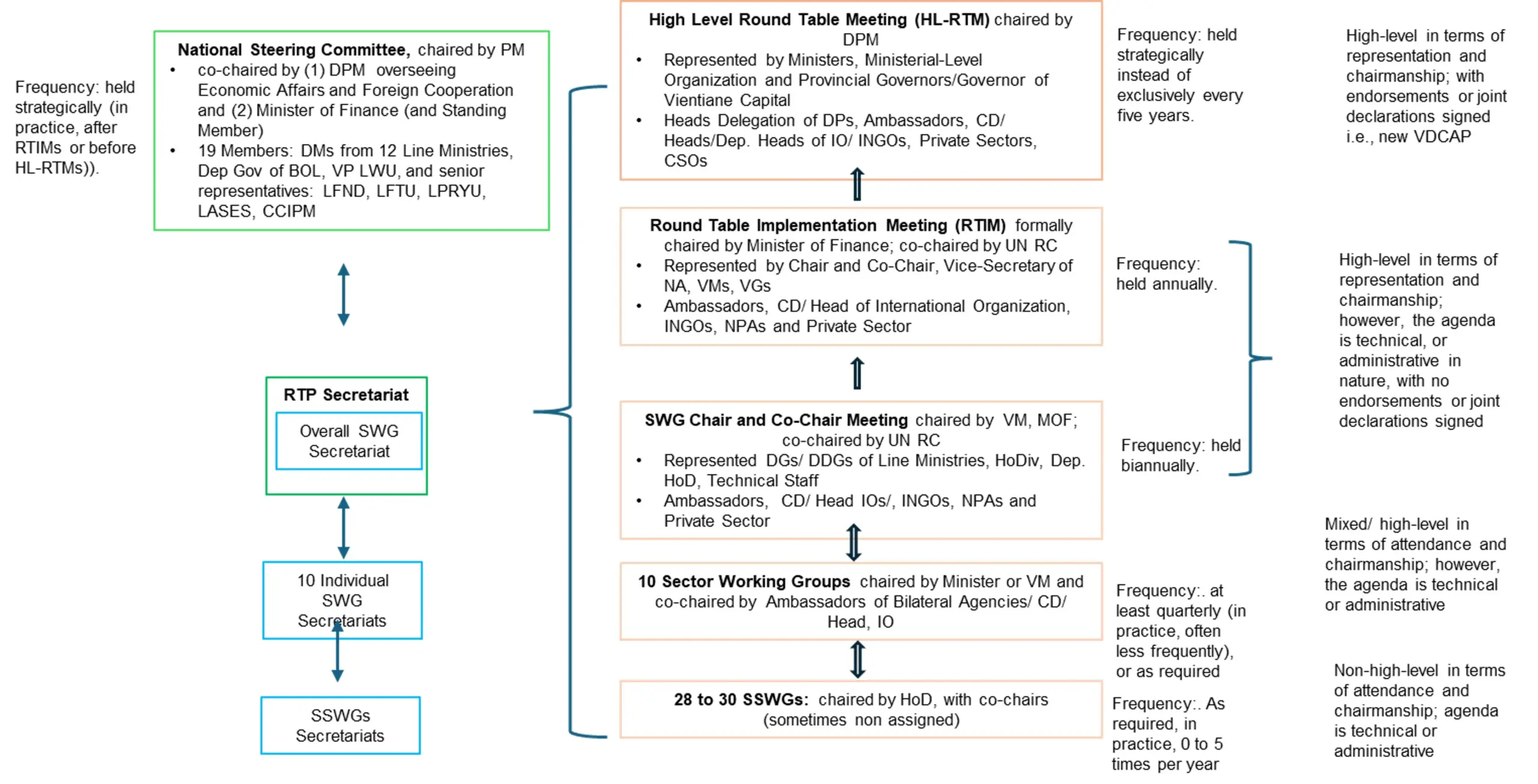
Hierarchy and Decision-Making at the RTP
— Milestones The process at a glance